Chapter 9
Not everything deserves a table
After the email mess, Gary slows down.
Not to fix things.
Not to add structure.
But to think.
The urge to model everything

Once Gary starts noticing structure,
it’s hard to stop.
Every repeated thing could be a table.
Every detail could be split out.
Every value could be formalized.
But something feels off.
This doesn’t feel like clarity.
It feels like noise.
Sam pushes back
Sam notices Gary hesitating.
“You don’t have to model everything,” he says.
Gary looks surprised.
“I thought that was the point,” he says.
Sam shakes his head.
“The point is to model what matters.”
Some things are allowed to be vague
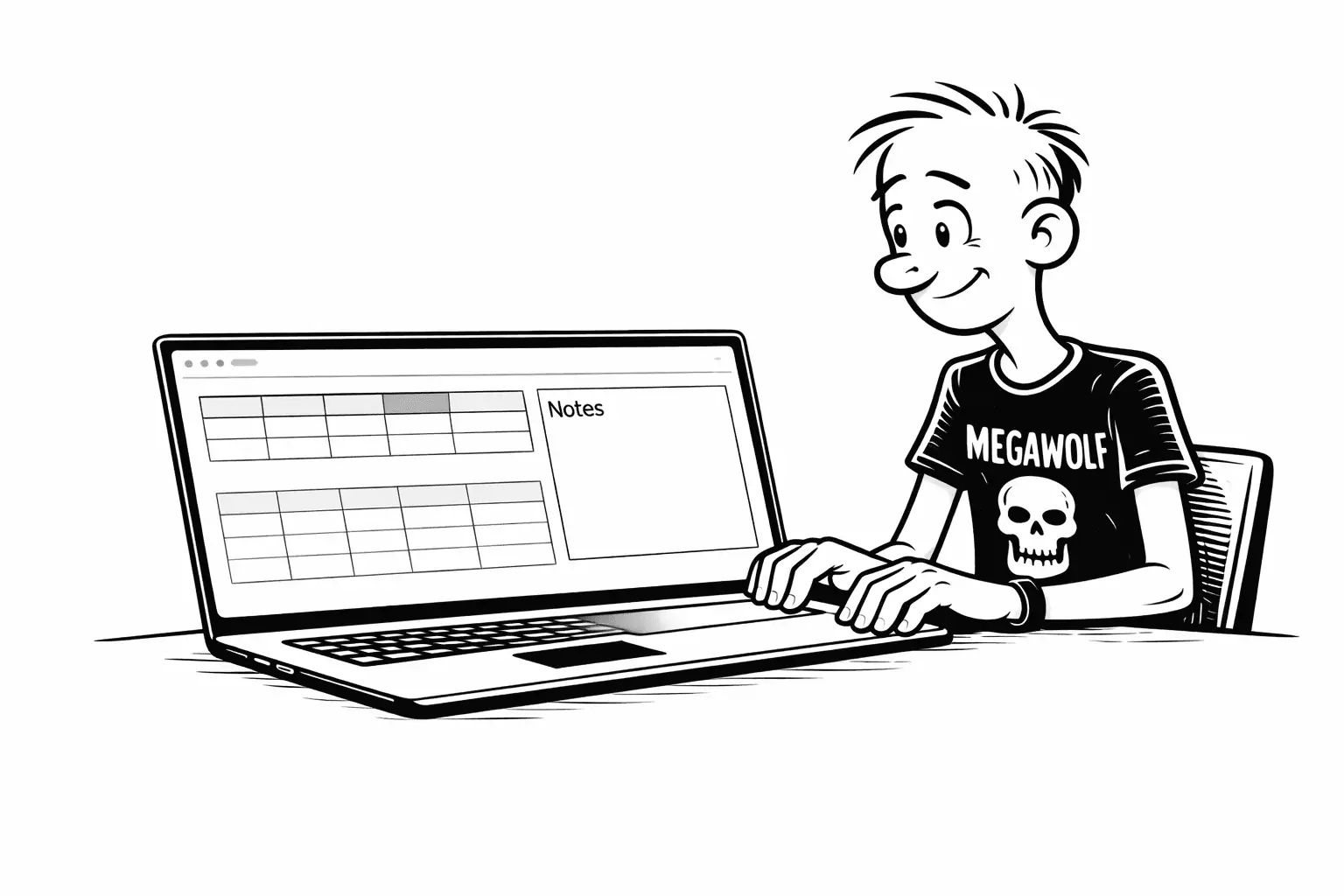
Gary thinks about the notes he keeps.
Some are reminders.
Some are impressions.
Some are things that will never be used again.
Trying to formalize all of that
wouldn’t make the system clearer.
It would just make it heavier.
Structure has a cost
Every table adds:
- rules
- expectations
- maintenance
Once something is modeled, it wants to stay consistent.
Gary realizes that structure isn’t free.
It pays off when it reduces thinking.
It costs when it creates new decisions.
Choosing restraint
Gary makes a different kind of decision.
Some information will stay loose.
Some will stay descriptive.
Some will only exist as notes.
Not because it’s lazy.
But because it’s honest.
The system doesn’t need to answer every question.
Only the important ones.
Continue reading
In the next chapter, Gary makes a different kind of split.
Not because something repeats —
but because two things should change independently.