Chapter 30
What Gary actually built
Gary leaned back and looked at the system one last time.
Not the tables.
Not the rules.
Not the bookings.
The shape of it.
It was quieter now.
Fewer surprises.
Fewer “wait, why did that happen?” moments.
Fewer decisions made too late.
Nothing magical had happened.
The store was the same.
The records were the same.
The customers were the same.
What had changed was when decisions were made.
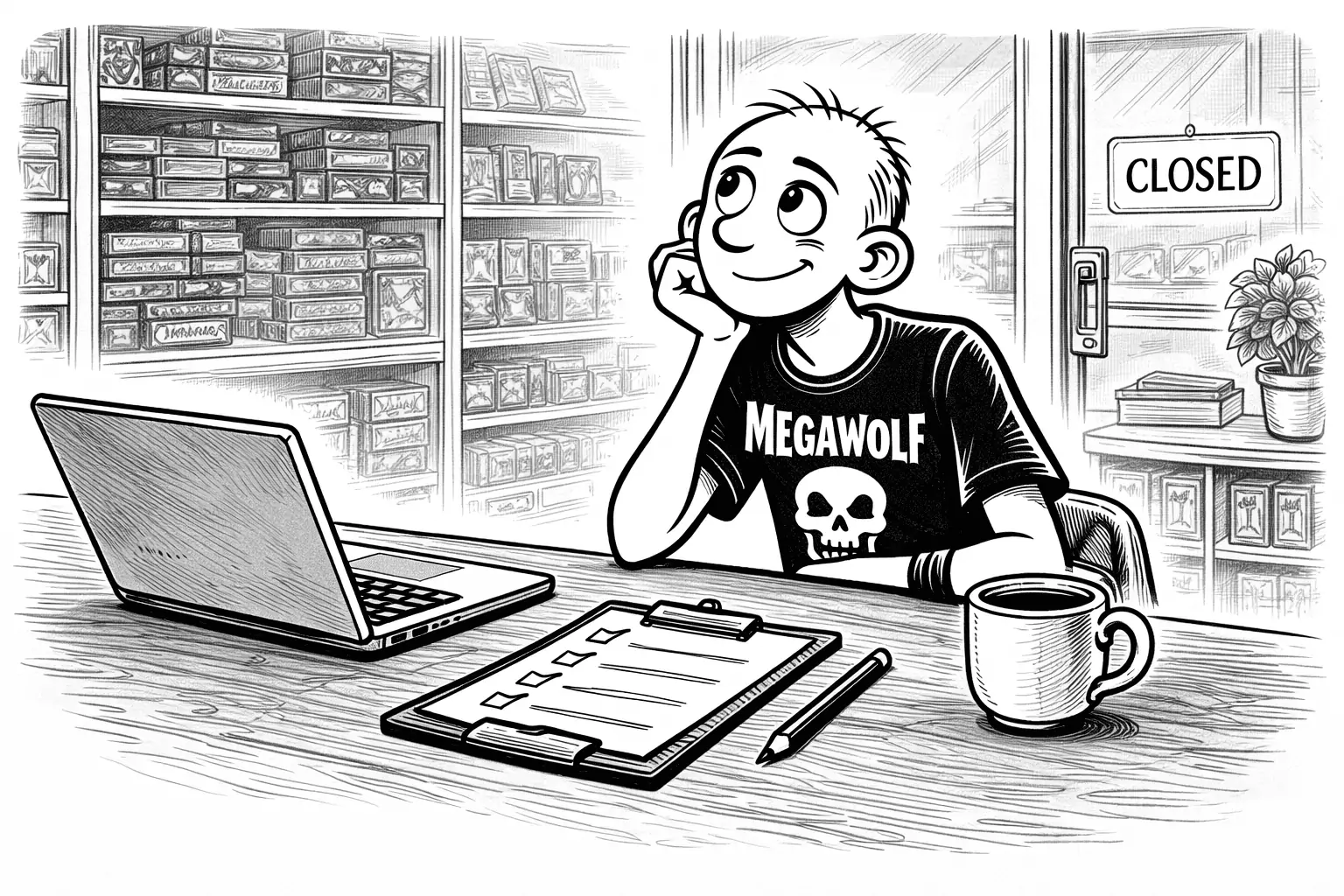
From reacting to deciding
Before, Gary handled problems when they showed up.
A duplicate artist?
Fix it later.
A missing year?
He’ll remember.
Two people booking the same thing?
He’ll sort it out.
The system didn’t stop him from doing that.
It just made it obvious when he was choosing uncertainty.
And when he wasn’t.
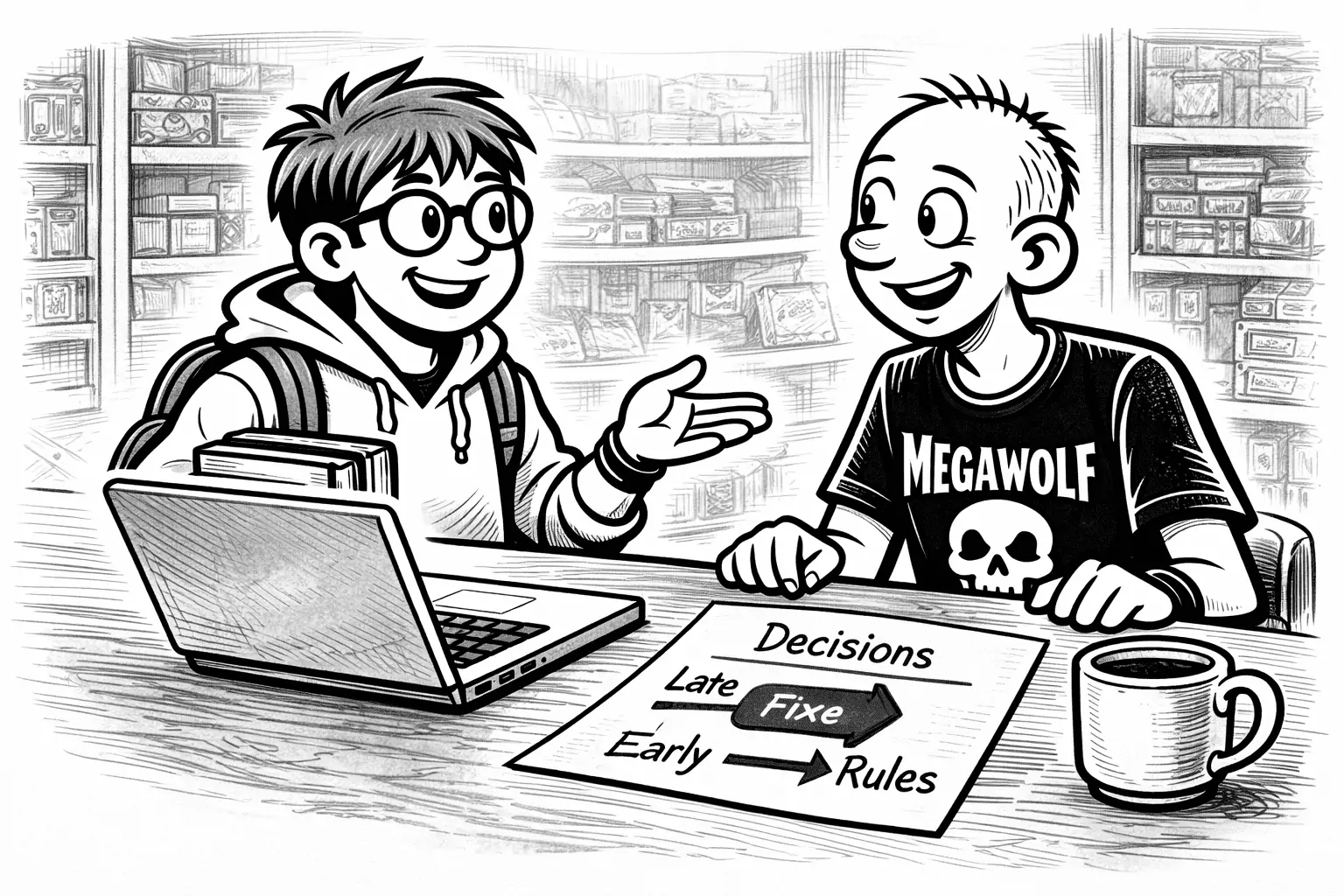
Structure didn’t remove flexibility
It removed ambiguity
Gary had worried about that.
That once things were “modeled”,
they would be locked.
But the opposite happened.
Because now:
- exceptions were explicit
- rules were visible
- time was defined, not implied
The system didn’t say what must be true.
It said:
“If you do this, these are the consequences.”
And for the first time, those consequences were predictable.
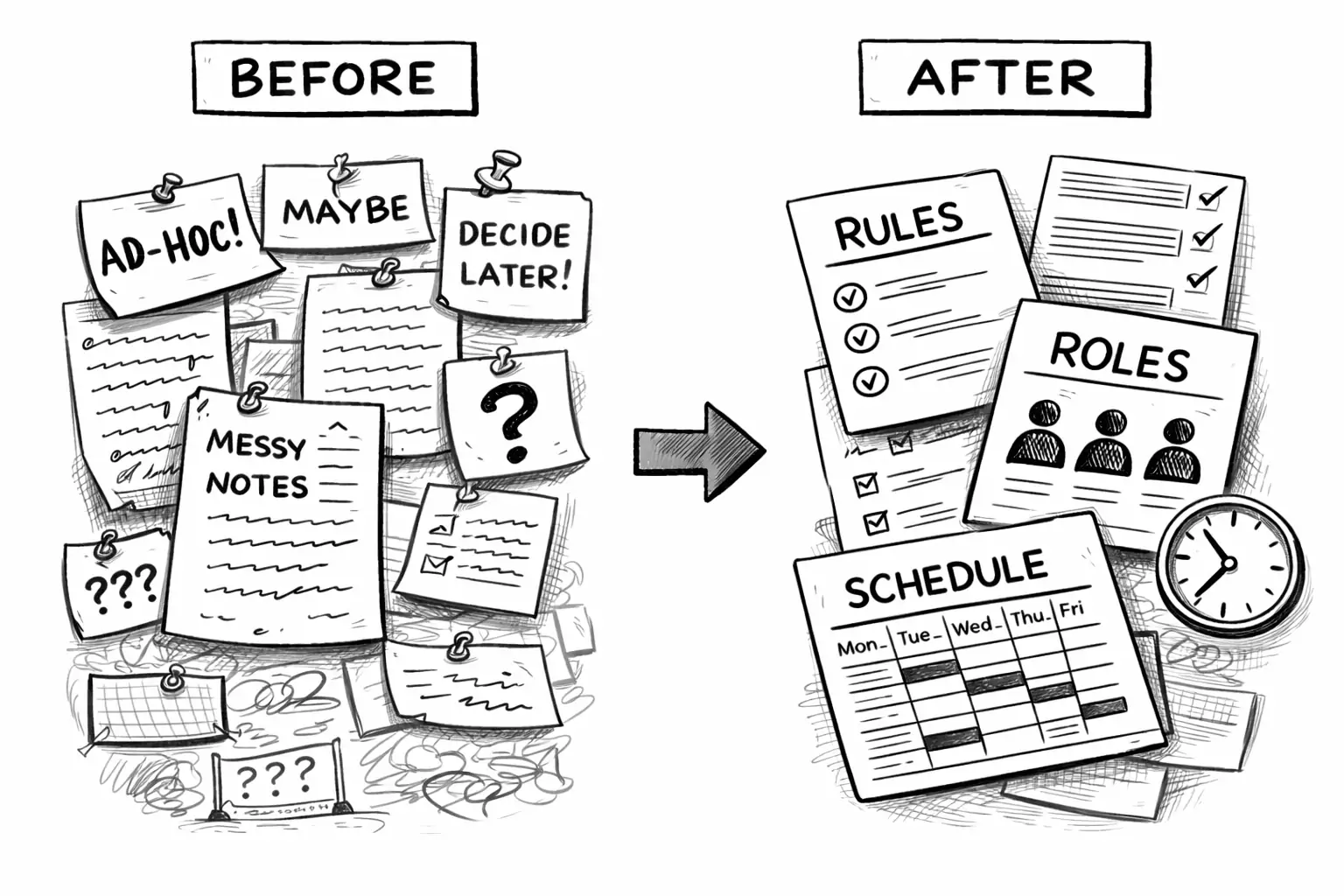
What Sam never actually built
Sam never built Gary a system.
He helped Gary stop lying to himself about complexity.
About:
- how many things an album can be
- how many roles a person can have
- how many rules are really “just advice”
- how much time actually matters
Once those things were acknowledged,
the structure followed naturally.
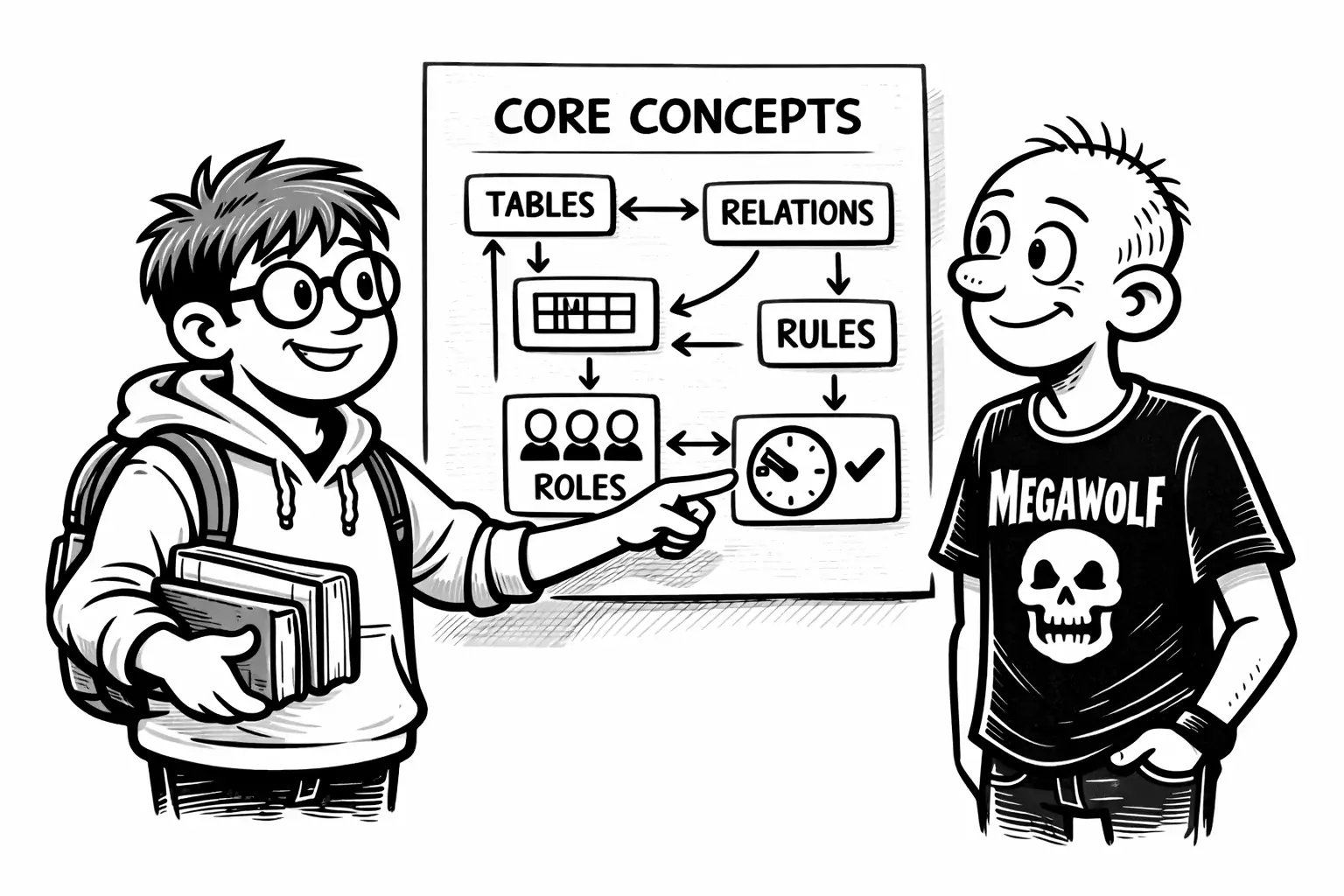
The quiet win
The biggest change wasn’t correctness.
It was confidence.
Gary no longer wondered:
- “Did I remember everything?”
- “Will this break something else?”
- “What happens if I’m not here?”
The answers were already there.
Not because the system was smart —
but because the thinking was finished earlier.
What this story was really about
This was never a story about software.
It was a story about:
- taking vague knowledge seriously
- deciding before acting
- and accepting that structure is not a constraint
It is a form of care.
Gary didn’t build a perfect system.
He built one that could be trusted.
And that turned out to be enough.