Chapter 24
When meaning depends on more than one thing
Customers had started asking a different kind of question.
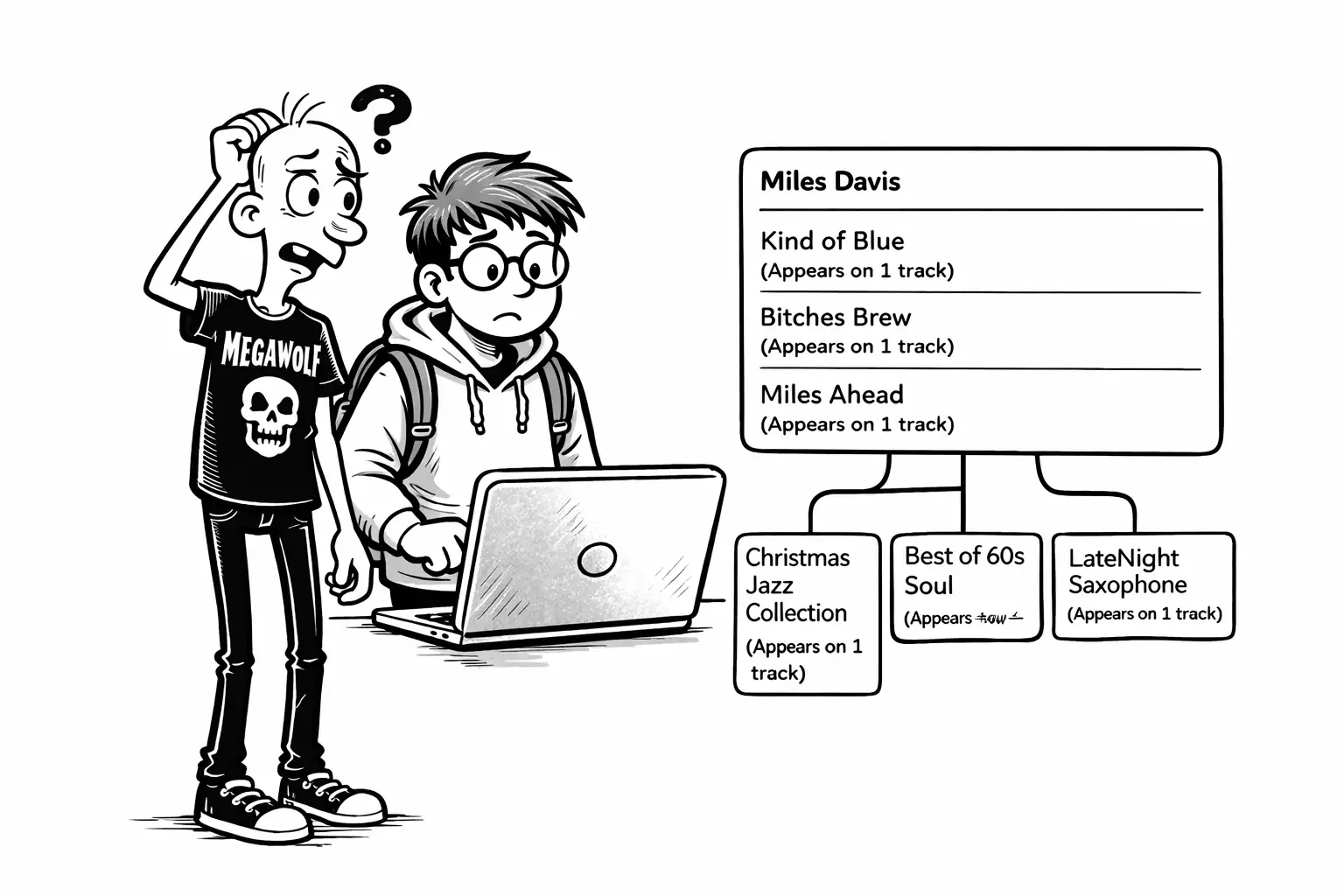
“Do you have Miles Davis?”
Gary typed the name into the system.
The list filled instantly.
Kind of Blue.
Bitches Brew.
Miles Ahead.
But also:
Christmas Jazz Collection.
Best of 60s Soul.
Late Night Saxophone.
Miles Davis appeared on one track in each.
Technically, the system was correct.
The relation existed.
But that wasn’t what the customer meant.
When technically correct feels wrong
“If someone searches for Miles Davis,” Gary said, “they don’t mean every album he ever touched.”
Sam nodded.
“This isn’t a missing value problem.”
“And not a missing relationship,” Gary added.
“The albums do have Miles connected.”
“But the result still feels wrong.”
Sam leaned back.
“That’s because structure isn’t the same as meaning.”
Customers can find true Miles albums
The system was doing exactly what it was designed to do:
Find every album related to Miles Davis.
The relation existed.
So the albums appeared.
But customers expected something narrower:
Albums where Miles Davis was the artist — not just one contributor among many.
That expectation did not yet exist in the structure.
Introducing the compilation flag
Sam suggested something simple.
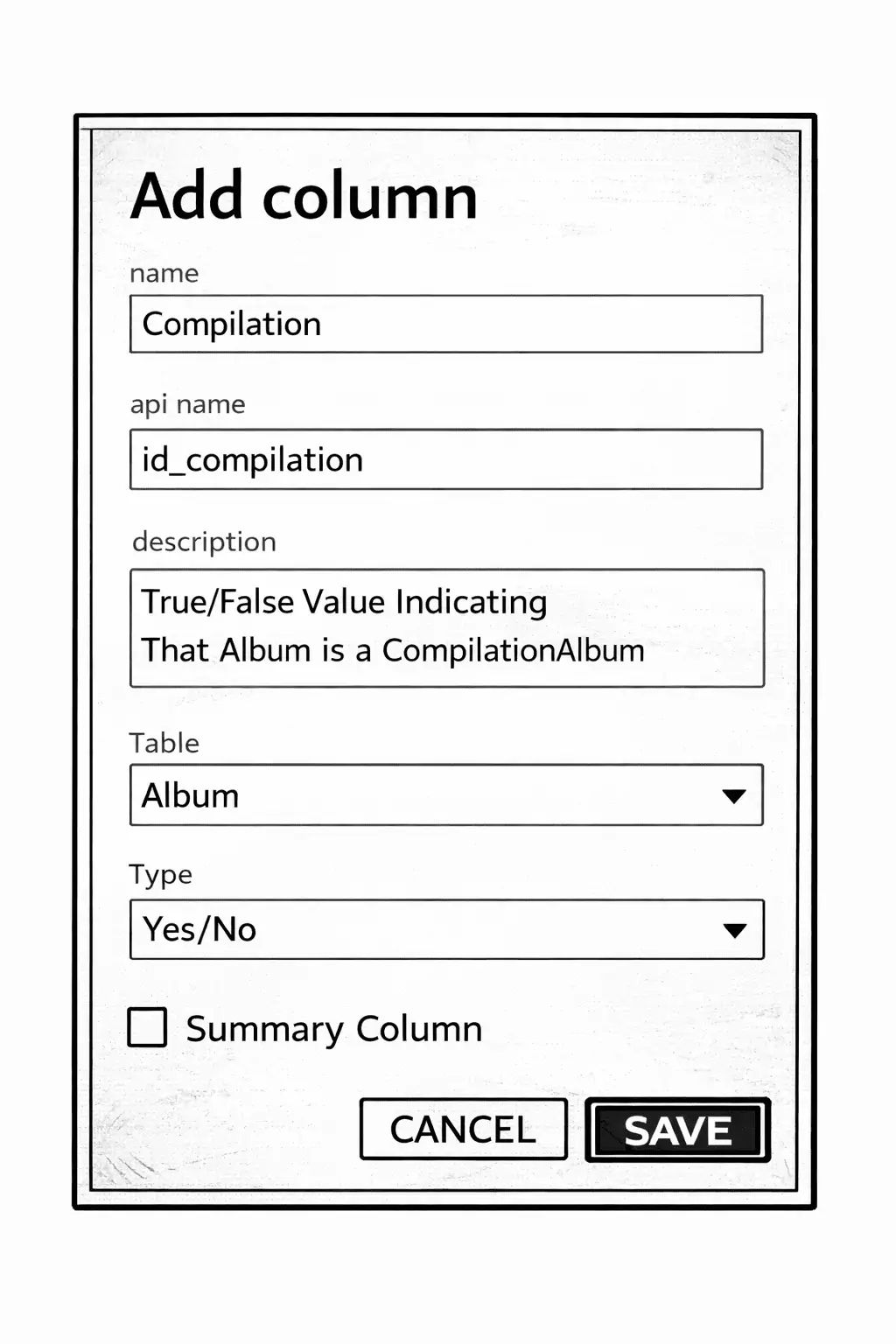
A checkbox.
Compilation
“If it’s checked,” he said, “we’re explicitly saying this album gathers recordings from different sources.”
They added a boolean column to the Album table:
Name: Compilation
API name: is_compilation
Now albums could explicitly state
whether they were compilations.
Turning it into meaning
A flag alone doesn’t change search results.
So they added a value classification.
Name: Compilation
Based on: is_compilation = true
Sam checked Use as Filter.
Now the classification wasn’t just descriptive.
It could actively shape searches.
Trying the filter
Gary searched again.
Miles Davis.
This time he applied the filter:
Exclude Compilation.
The list changed.
Kind of Blue.
Bitches Brew.
Miles Ahead.
The sampler albums disappeared.
Now customers could find
true Miles Davis albums.
The structure hadn’t changed.
The relations were still correct.
But meaning had been clarified.
Continue reading
The compilation flag fixed the search problem.
But Gary still had a data quality problem.
Most compilations should list more than one artist. If someone checks Compilation and forgets to add the other artists, the album becomes misleading.
In the next chapter, Gary and Sam define a rule that only triggers when both things are true:
- the album is marked as a compilation
- the album does not have more than one artist