Chapter 13
When Hank enters the picture
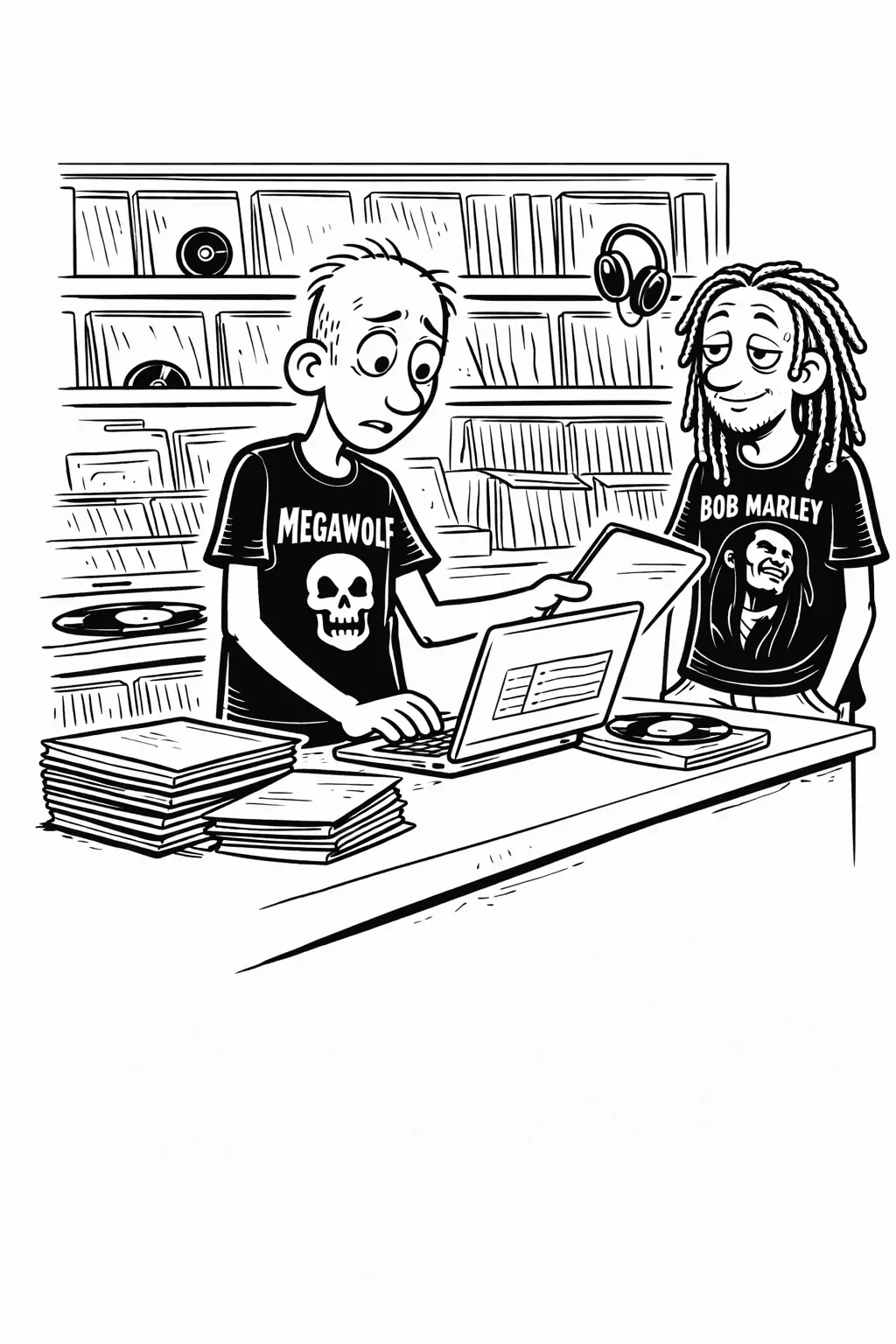
Gary hires Hank because he’s good with records.
Very good.
Hank knows pressings by heart.
Spots condition issues instantly.
Moves through stacks faster than anyone Gary has worked with before.
Hank is also laid back.
If a field looks optional,
he skips it.
If something feels obvious,
he doesn’t slow down to fill it in.
Gary notices —
but doesn’t make a thing of it.
Hank is doing real work.
Small gaps appear
At first, nothing breaks.
A missing year.
A blank note.
An unfinished description.
The spreadsheet still works.
Search still works.
Sales still happen.
Gary fills in the gaps when he sees them.
Hank shrugs.
“Missed that one.”
It feels minor.
The pressure isn’t technical
Gary realizes something quietly important.
The structure isn’t wrong.
The data model isn’t failing.
The issue is behavior.
Hank isn’t careless.
He’s fast.
And Gary doesn’t want to manage speed
by hovering over a keyboard.
He wants the system
to help without policing.
A new kind of problem
Gary doesn’t need better data.
He needs a way to protect shared work
without slowing good people down.
This isn’t about mistakes.
It’s about trust —
and what happens when more than one person
touches the same system.
Continue reading
In the next chapter, Gary tries something simple.
Instead of correcting Hank,
he lets the sheet point things out.