Chapter 11
Modeling is choosing a future
Gary doesn’t add anything new.
No columns.
No tables.
No rules.
He just looks at what he’s built.
The system tells a story now
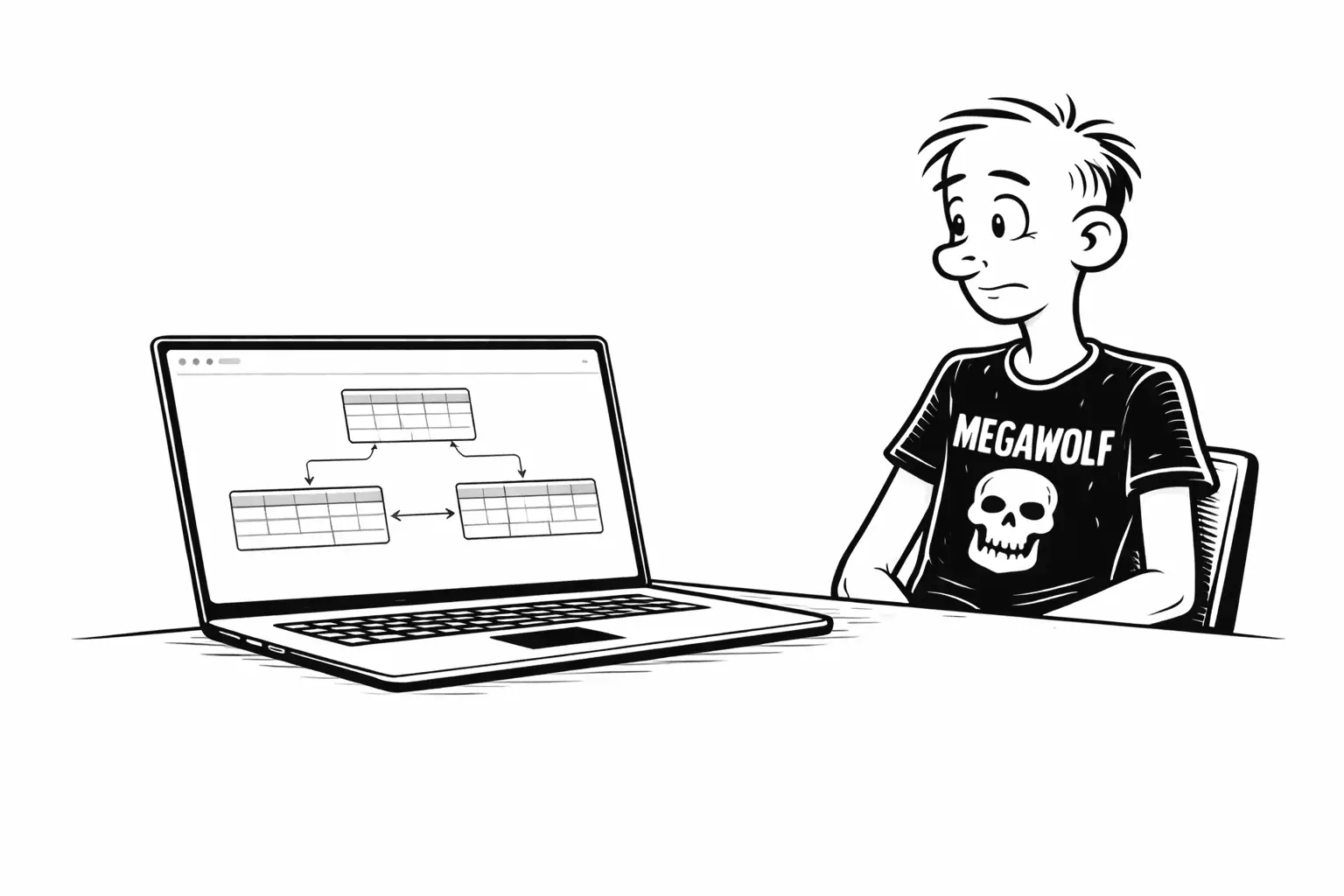
He sees records and artists.
Customers and phone numbers.
Notes that stay loose.
Details that are carefully separated.
None of it feels accidental anymore.
Each decision points to something he cared about at the time.
The past choices show up in the present
Gary notices how easily he can answer questions now.
Not because he memorized rules —
but because the system already reflects them.
What belongs together stays together.
What changes often is separate.
What doesn’t matter stays informal.
The structure does the remembering.
Nothing here is neutral
Gary realizes something subtle.
Every table he created
made some things easy —
and made other things harder.
Every shortcut he avoided
kept meaning visible.
Every shortcut he took
pushed work back onto him.
The system didn’t force any of this.
He chose it.
The future is already implied
Gary imagines tomorrow.
More customers.
More records.
More questions.
He doesn’t know what those questions will be.
But he knows this:
The structure will shape
which questions are easy,
which are possible,
and which are painful.
The future isn’t waiting.
It’s already embedded.
Continue reading
In the final chapter, Gary notices the result.
Not complexity.
Not cleverness.
Confidence.