Temporal relations
Temporal relations describe how two time intervals relate to each other. In Minyu, they are used when filtering rows based on how a row’s time span compares to a reference interval.
Each comparison evaluates:
- Interval A – the interval of the row being evaluated
- Interval B – the reference interval
The relation between these two intervals determines whether the row is included or excluded.
Why temporal relations exist
Time-based data rarely fits simple equality checks.
Scheduling, availability, and temporal classifications require understanding whether intervals overlap, touch, contain, or are separated in time. Temporal relations provide a precise and consistent way to express these comparisons.
By selecting explicit relations, filtering behavior becomes predictable and unambiguous.
Supported relations
Minyu supports 13 temporal relations.
In all examples below:
- Interval A is the evaluated row
- Interval B is the reference interval
1. Before
Interval A ends entirely before Interval B begins.
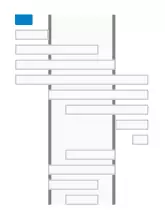
2. Meets
Interval A ends exactly when Interval B begins.
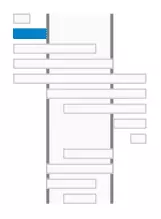
3. Overlaps
Interval A starts before Interval B begins and ends after Interval B has started.
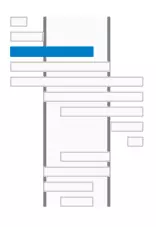
4. Starts
Interval A starts at the same time as Interval B but ends earlier.
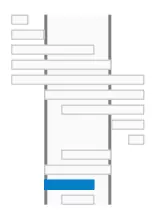
5. During
Interval A is fully contained within Interval B.
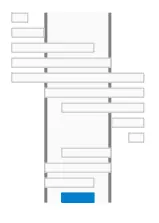
6. Finishes
Interval A ends at the same time as Interval B but starts later.
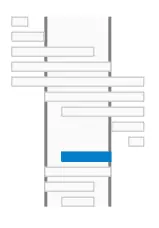
7. Equals
Interval A and Interval B start and end at exactly the same time.
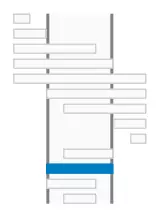
8. After
Interval A starts entirely after Interval B ends.
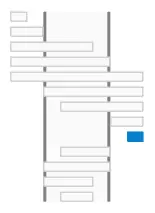
9. Met by
Interval A starts exactly when Interval B ends.
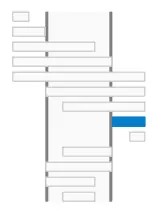
10. Overlapped by
Interval A starts after Interval B has started but ends before Interval B ends.
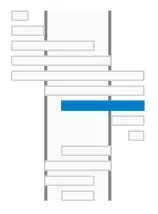
11. Started by
Interval A starts at the same time as Interval B but ends later.
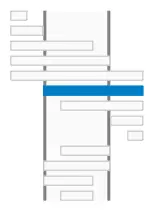
12. Contains
Interval A fully contains Interval B.
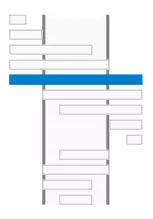
13. Finished by
Interval A ends at the same time as Interval B but starts earlier.
How to read the selector
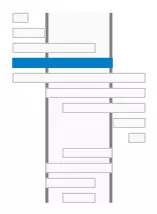
The temporal relation selector visualizes these relations directly.
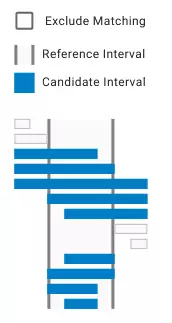
- The vertical bar represents the reference interval.
- The horizontal bars represent candidate intervals.
- Each horizontal bar’s position relative to the vertical bar corresponds to one temporal relation.
Selecting a relation includes rows whose intervals match that relation.
An Exclude matching option inverts the result: - Rows matching the selected relations are excluded. - All other rows are included.
This inversion changes the filter outcome, not the definition of the relations.
Related resources
Related concepts