Set logic
Relational classifications in Minyu operate on sets of rows, not on individual values.
Set logic defines how multiple result sets are combined, filtered, or compared to produce a final outcome.
In Minyu, all set operations work on row identity. Attribute values are not compared directly.
What a set is
A set is a collection of row identities (id) originating from the same table.
- Each row can appear at most once in a set.
- Sets do not preserve order.
- All operations are type-safe: sets must originate from the same table.
Sets are produced by relation traversal, classification evaluation, and filtering.
Core properties
All set operations in Minyu share these properties:
-
No duplicates
Membership is based on row identity. A row cannot appear more than once. -
Type safety
Set operations are only valid between sets from the same table.
Cross-table combinations are not allowed.
These constraints are enforced by the system.
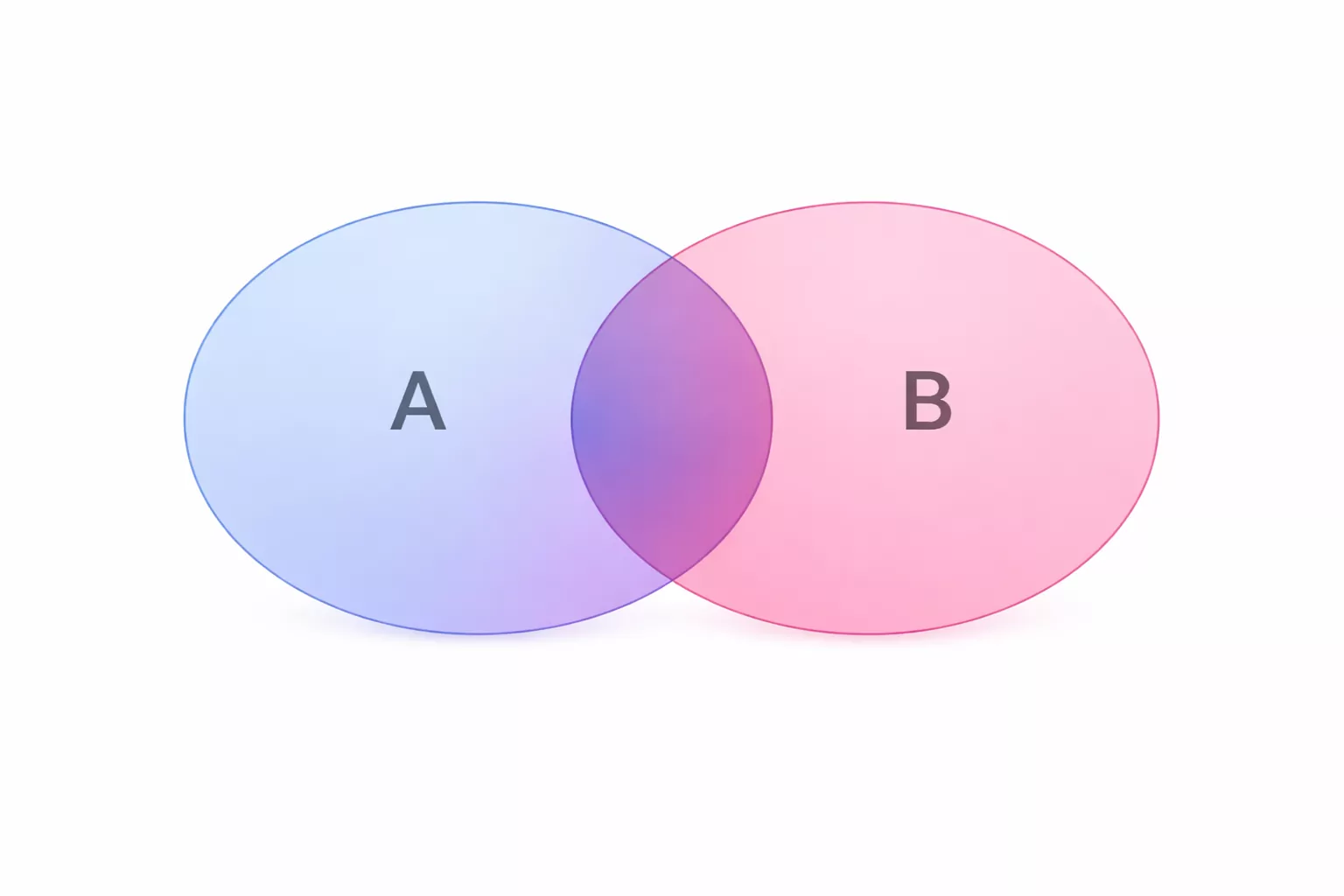
Union (A ∪ B)
The union contains all rows that exist in either set A or set B.
- Minyu meaning: rows that match Classification A OR Classification B.
| Set | Result |
|---|---|
| Set A | {1, 2, 3, 4} |
| Set B | {3, 4, 5, 6} |
| Union (A ∪ B) | {1, 2, 3, 4, 5, 6} |
If a row appears in both sets, it still appears only once in the result.
Intersection (A ∩ B)
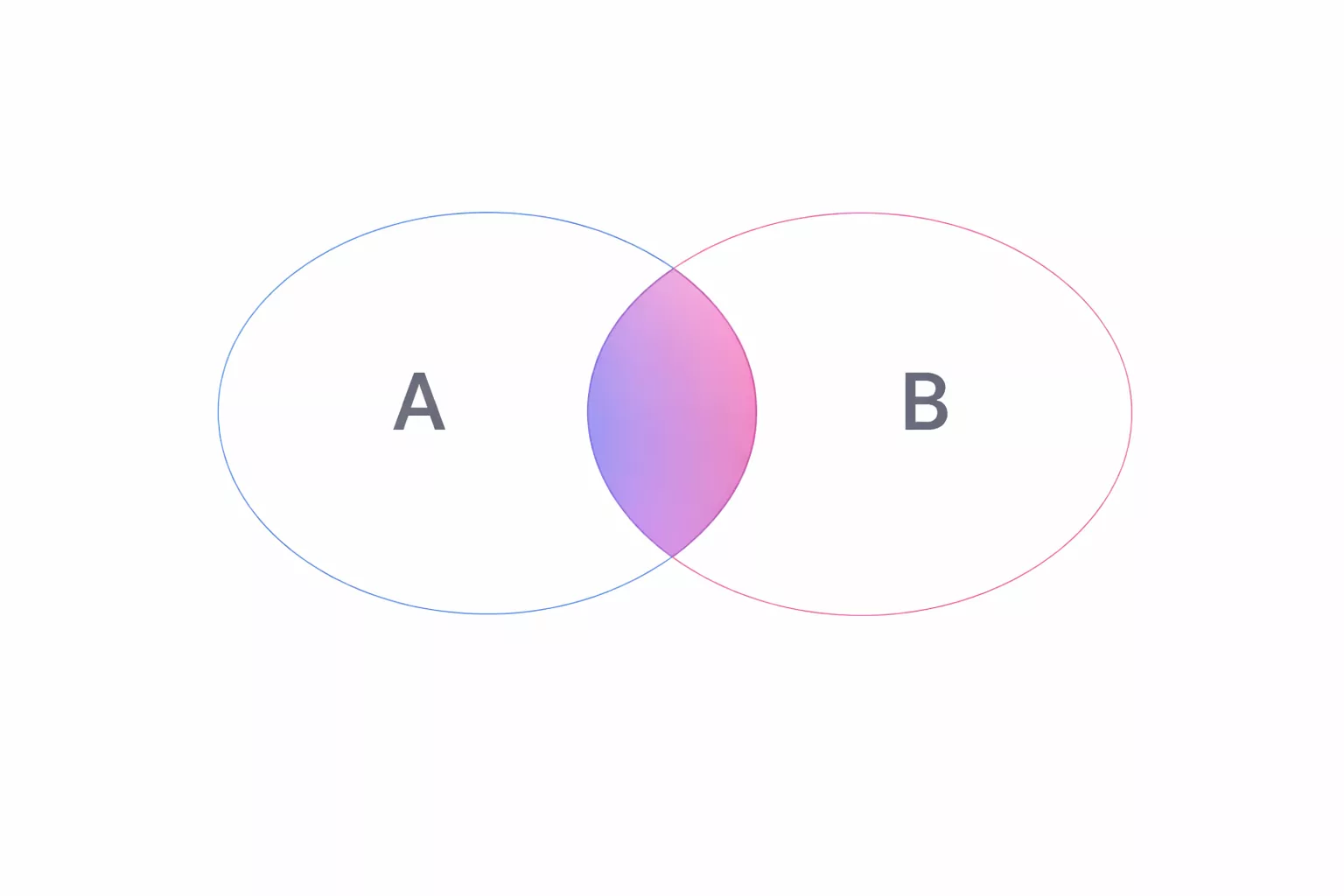
The intersection contains only rows that exist in both sets.
- Minyu meaning: rows that match Classification A AND Classification B.
| Set | Result |
|---|---|
| Set A | {1, 2, 3, 4} |
| Set B | {3, 4, 5, 6} |
| Intersection (A ∩ B) | {3, 4} |
If either input set is empty, the result is empty.
Difference (A − B and B − A)
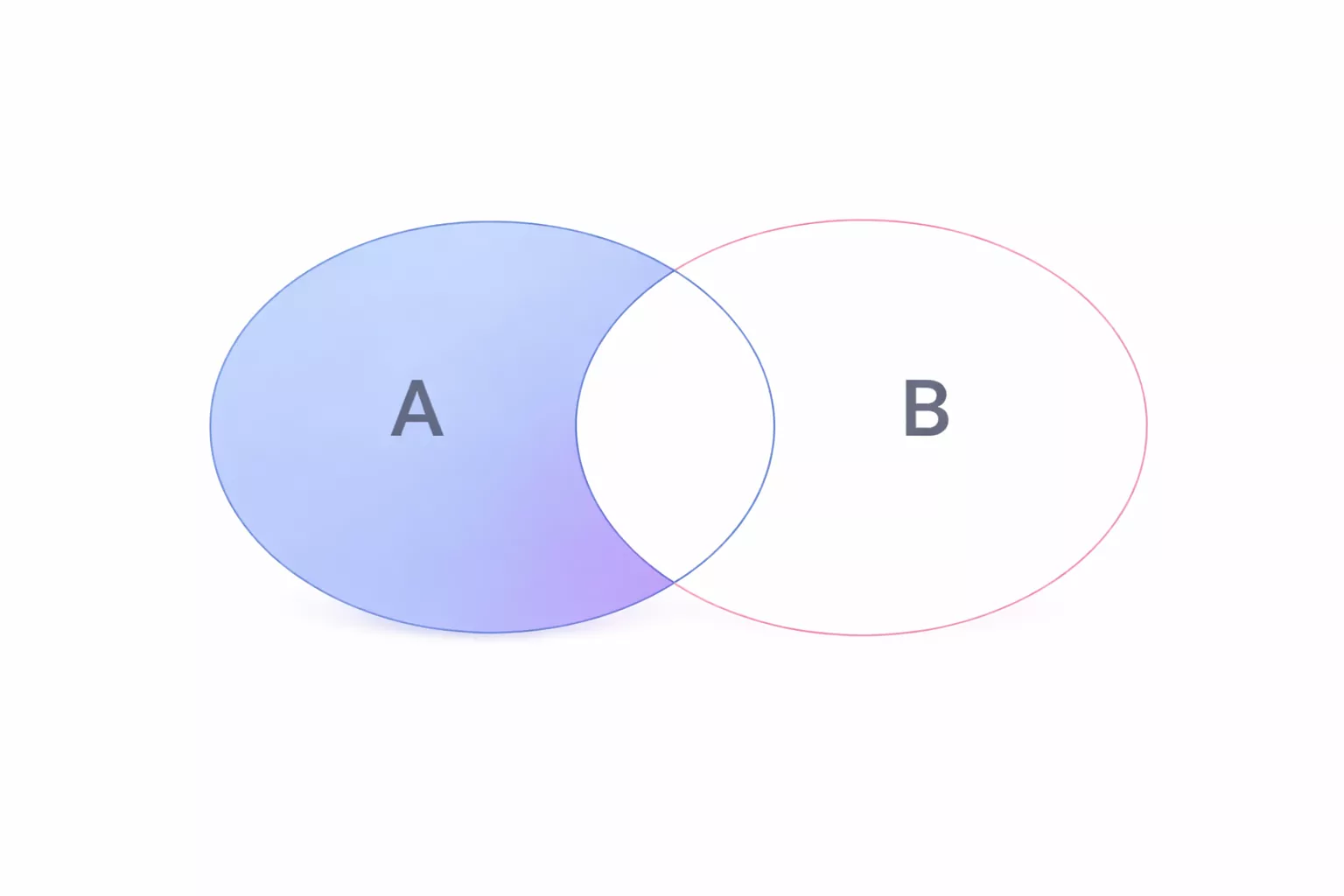
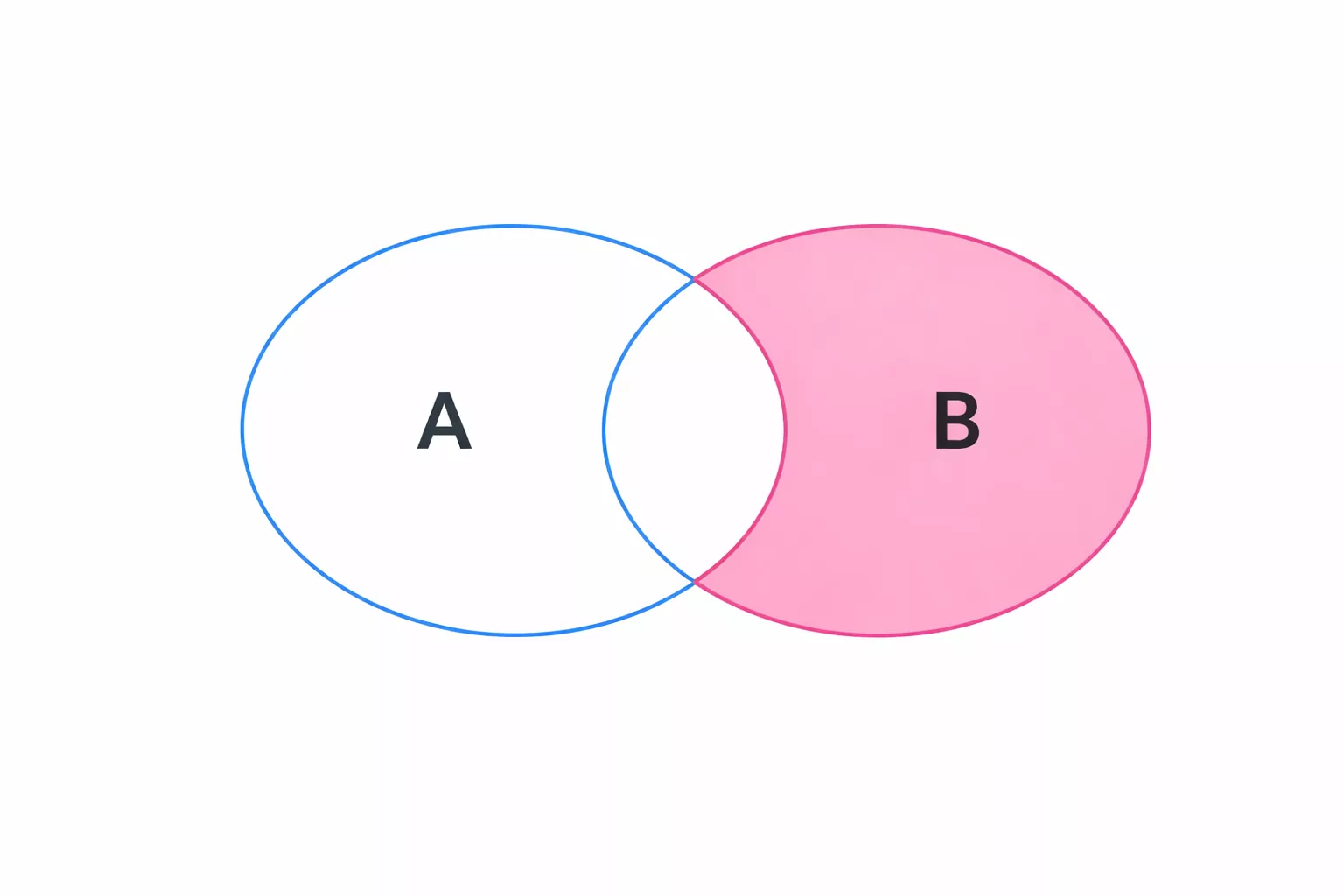
The difference contains rows that exist in one set but not the other.
- Minyu meaning: exclusion-based filtering.
This operation is directional.
| Operation | Result |
|---|---|
| Difference (A − B) | {1, 2} |
| Difference (B − A) | {5, 6} |
Reversing the operands changes the result.
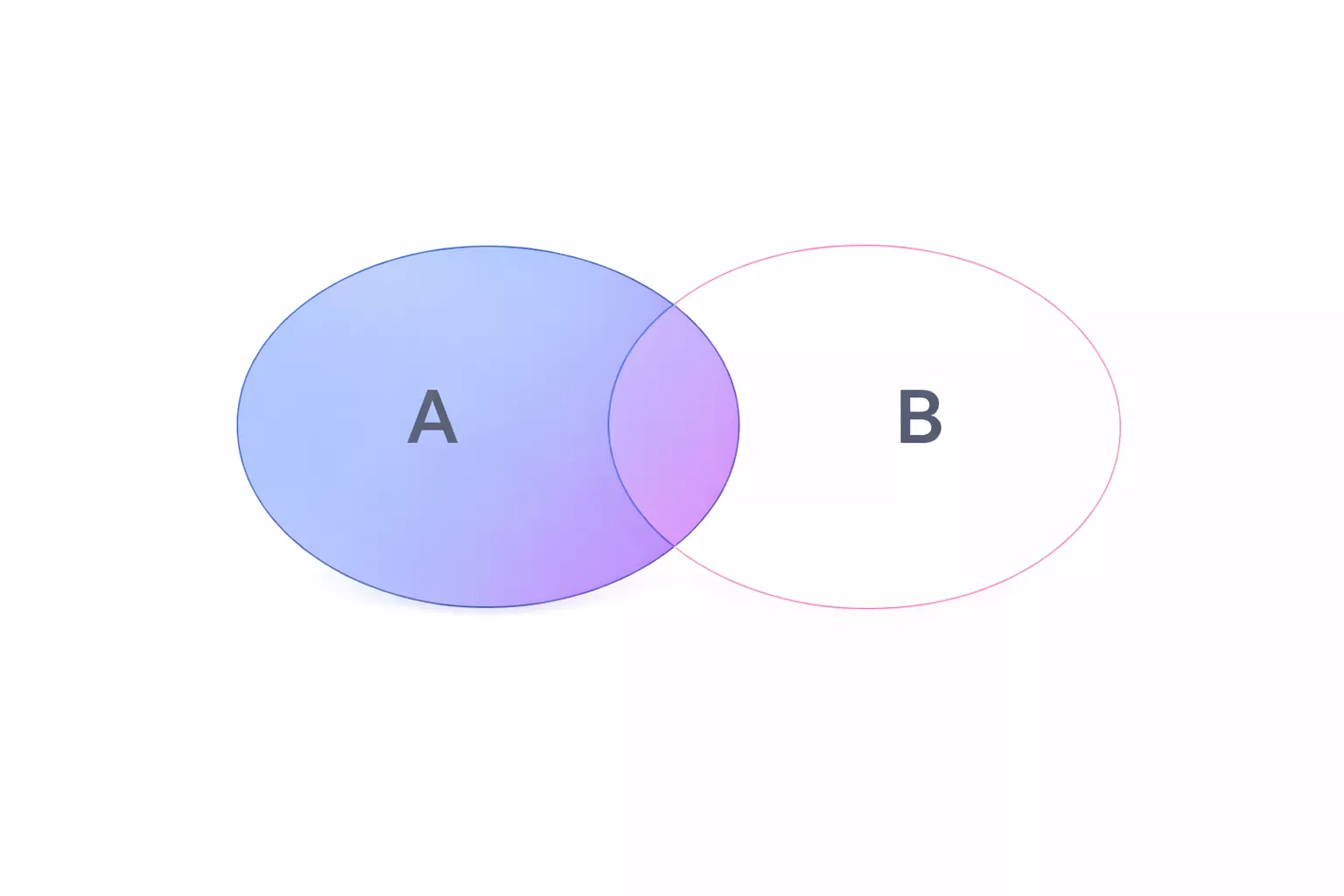
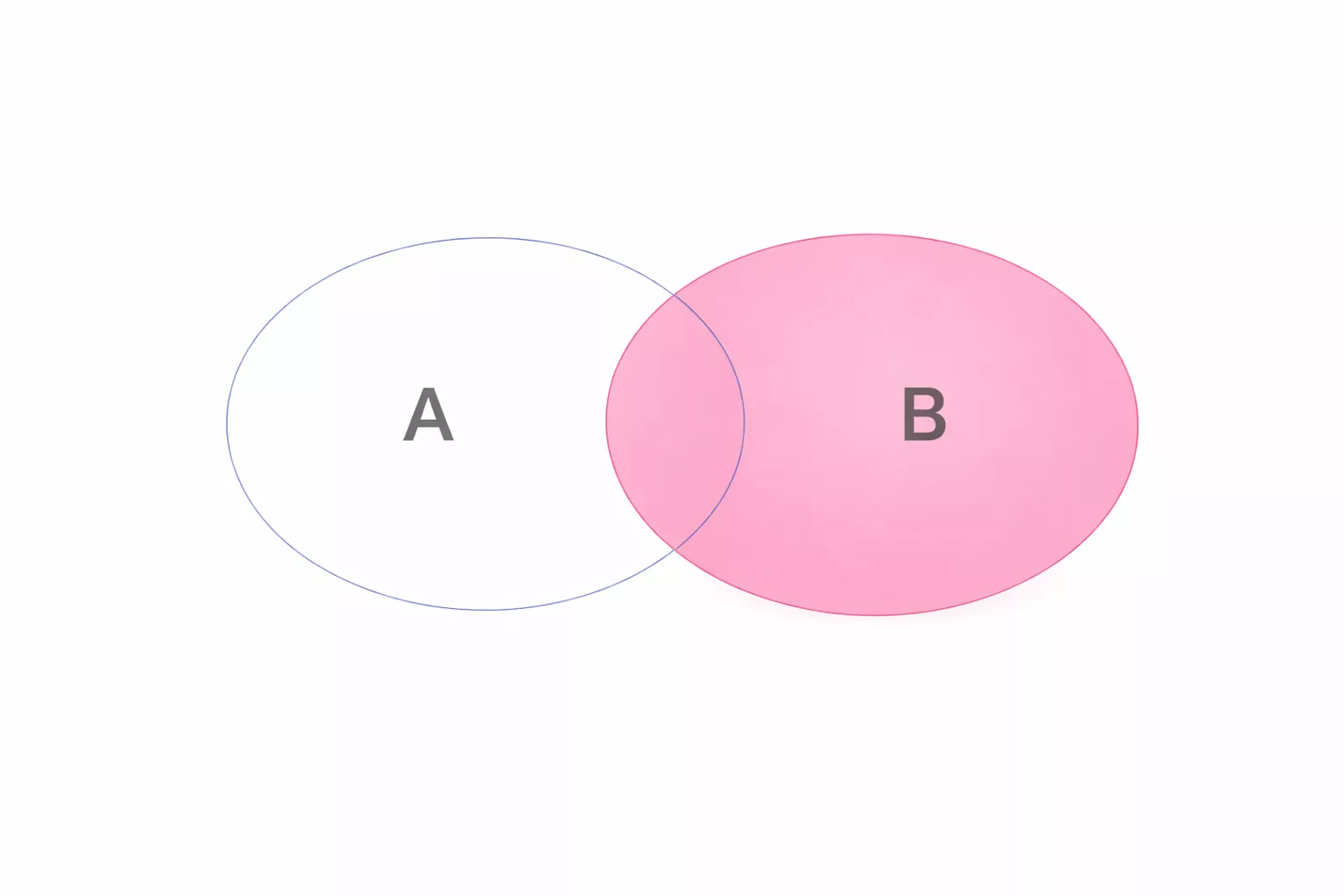
Identity selection (single-set selection)
Identity selection is not a mathematical set operation.
It represents selecting exactly one set without combining it with another.
This exists because Minyu allows selecting a single region in the set-selection model.
- Minyu meaning: pass-through of one classification result set without modification.
| Selection | Result |
|---|---|
| All in A | {1, 2, 3, 4} |
| All in B | {3, 4, 5, 6} |
No filtering or comparison occurs.
Symmetric difference (A Δ B)
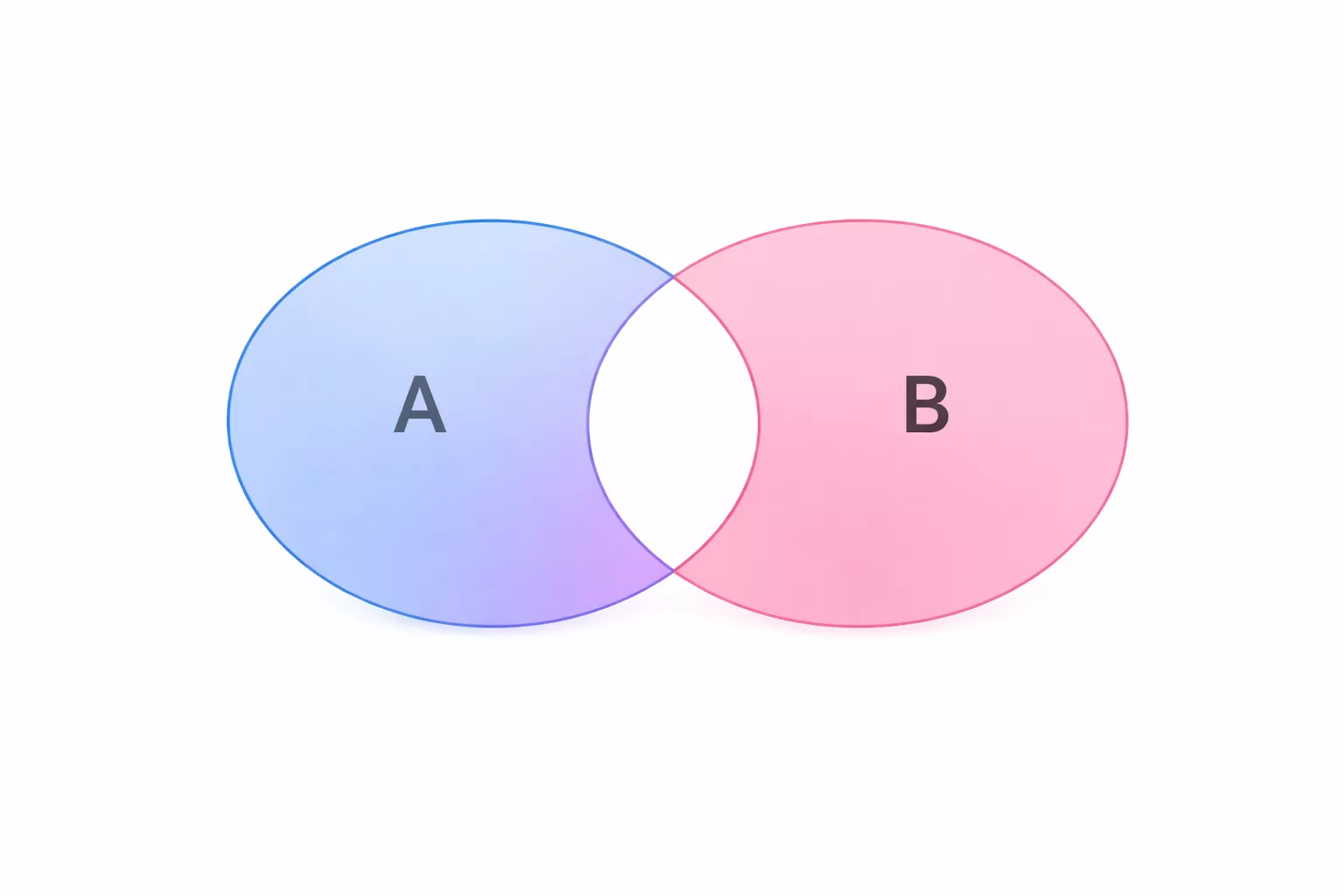
The symmetric difference contains rows that exist in either A or B, but not both.
- Minyu meaning: exclusive classification matching.
| Operation | Result |
|---|---|
| Symmetric difference (A Δ B) | {1, 2, 5, 6} |
Rows present in both sets are excluded.
Usage in Minyu
Set operations are used when combining results from:
- relational classifications
- logical classifications
- multi-path evaluations
They determine how multiple classification result sets are merged into a final evaluated set.
Evaluation always operates on row identity, ensuring stable behavior even when attribute values change.
Related resources
Related concepts