Cascading side effects
Summary
Cascading side effects happen when a small change in one part of a system triggers a chain of consequences in other parts of the business.
The original change may be correct.
The systems may work as designed.
There may be no technical error.
But the effects spread further than expected.
What started as a local adjustment becomes a cross-system disruption.
Touches lenses:
Processing, Integration, Rules
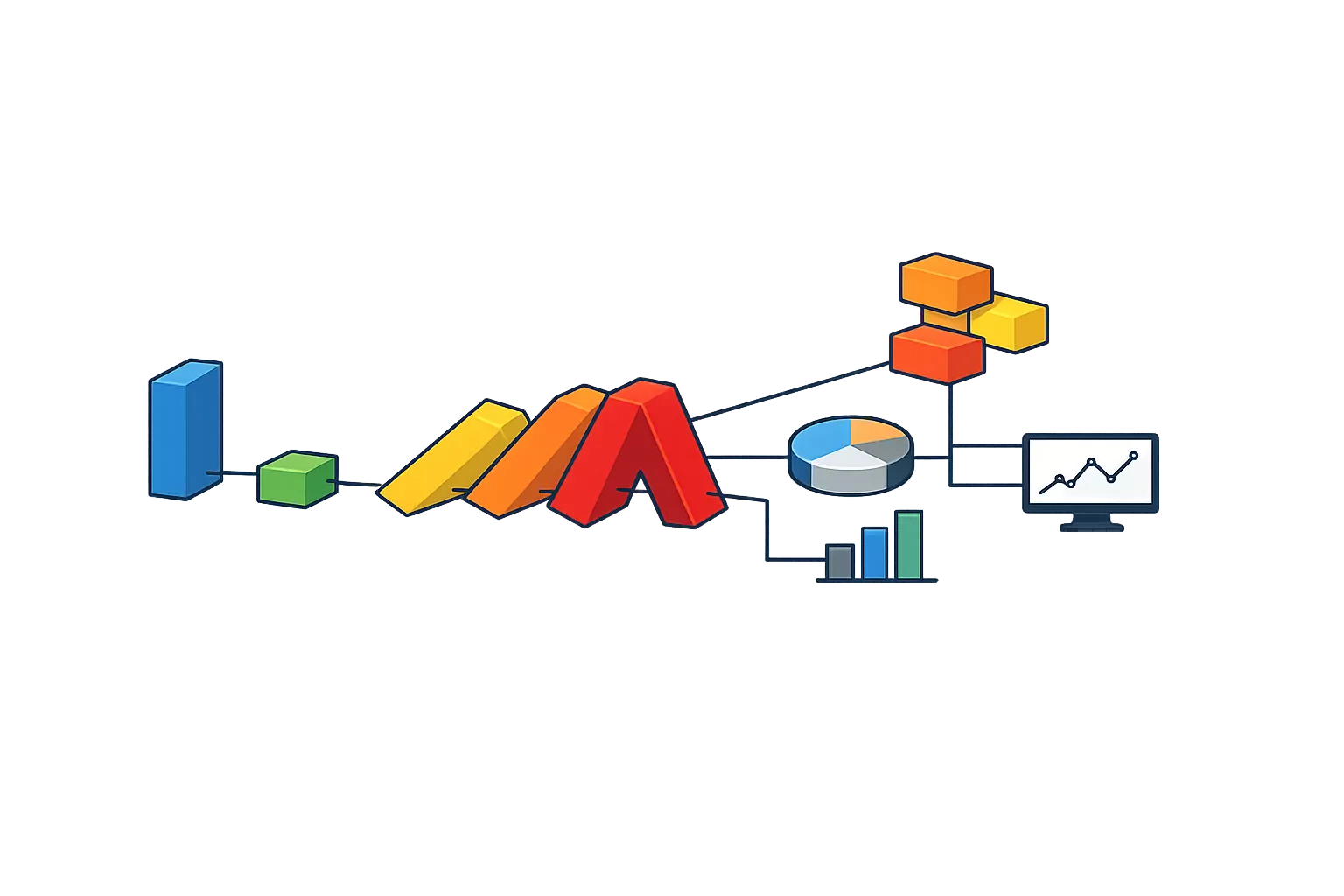
A simple example
Imagine a company changes one rule:
Customers who have not paid within 14 days are marked as “inactive.”
This sounds reasonable.
But in the system:
- “Inactive customers” are excluded from marketing emails.
- Inactive customers cannot place new orders.
- Sales dashboards only count active customers.
- Subscription renewals are paused for inactive accounts.
The change was meant to improve payment discipline.
Instead:
- Sales drop.
- Marketing metrics shift.
- Renewals decrease.
- Reports show sudden customer churn.
Nothing is broken.
The system is simply doing what it was told.
This is cascading side effects.
Recognition
You may have cascading side effects if:
- A small configuration change causes unexpected KPI shifts.
- A new rule “breaks” something unrelated.
- Teams say, “We only changed one thing.”
- Fixing one issue creates another.
- Rollbacks are common after releases.
The pattern is not chaos.
It is hidden coupling.
What is really breaking
The issue is not that changes are made.
The issue is that the system is tightly connected.
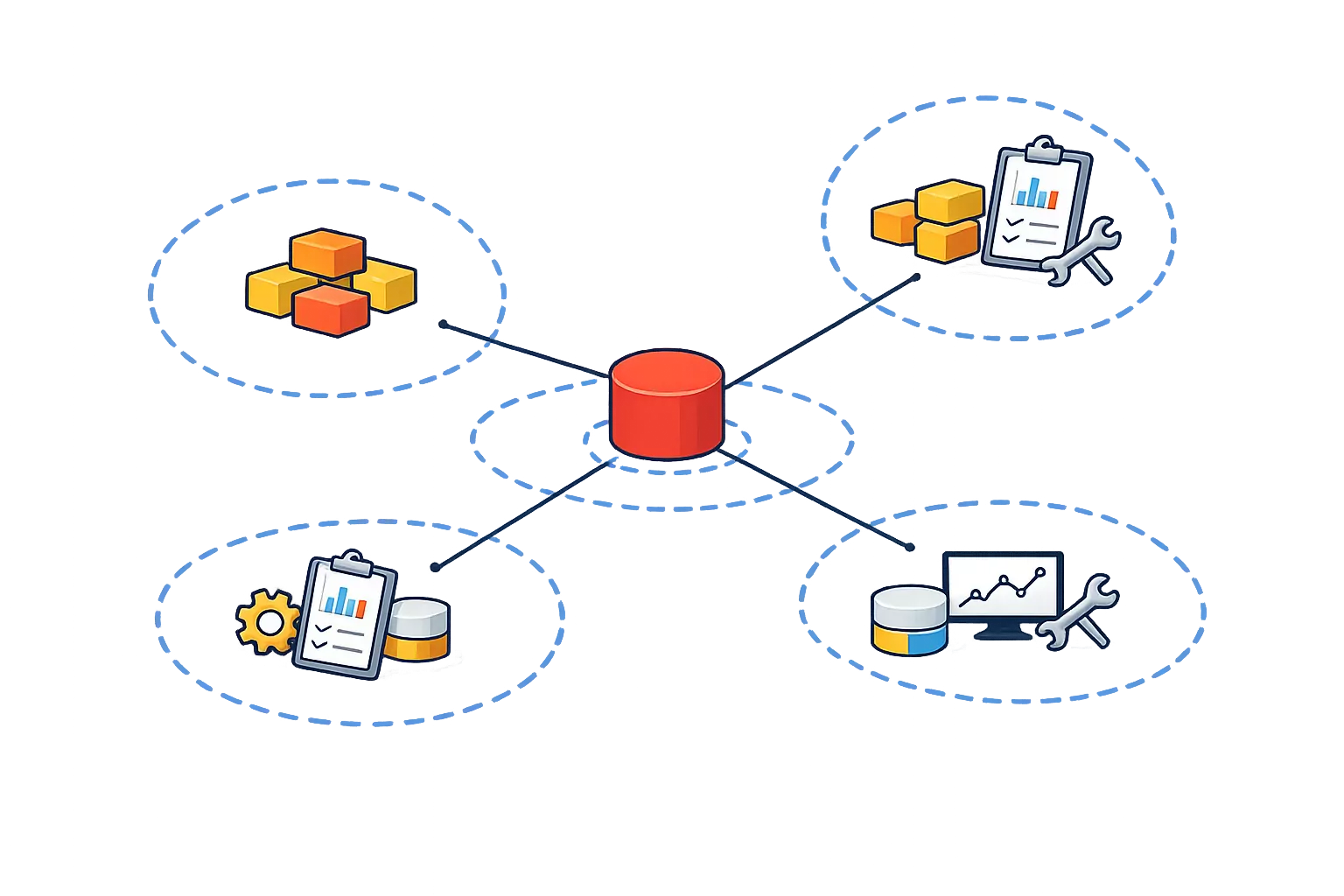
Business systems are not isolated components. They are networks of:
- Rules
- Derived values
- Integrations
- Automations
- Access restrictions
- Reporting logic
When one node changes, dependent nodes react.
For example:
- A status field feeds an automation.
- The automation updates another table.
- That table triggers an integration.
- The integration updates a financial system.
- Finance reports change.
Each step is logical.
But the chain may not be visible to decision-makers.
Why this happens
Cascading side effects usually develop over time.
It often starts like this:
- A system is introduced.
- A rule is added to improve control.
- An automation is added to save time.
- An integration is added to avoid manual work.
- A derived field is added for reporting clarity.
Each addition makes the system more powerful.
But each addition also increases dependency.
Over time, the system becomes a web rather than a line.
The more automated and interconnected the system becomes, the more sensitive it becomes to structural changes.
Why it is hard to detect
There are no visible errors.
- The database is consistent.
- Automations run successfully.
- APIs respond correctly.
- Reports calculate as defined.
The problem is not malfunction.
The problem is propagation.
Side effects are often:
- Indirect
- Delayed
- Distributed across systems
A change in pricing logic might affect:
- Commission calculations
- Tax handling
- Subscription renewals
- Revenue dashboards
But these impacts may only appear days or weeks later.
This makes root cause analysis difficult.
A second example: pricing adjustment
Imagine an SMB updates product pricing:
Increase price by 5%.
The pricing table updates correctly.
However:
- Commission percentages were calculated based on old price tiers.
- Discount rules were threshold-based.
- Free shipping applied above a fixed price.
- Subscription renewals use stored historical prices.
- A third-party accounting integration expects previous ranges.
Suddenly:
- Commission payouts are incorrect.
- Discounts trigger unexpectedly.
- Shipping costs increase.
- Renewal invoices mismatch.
- Accounting reconciliation fails.
The price change was simple.
The structure around it was not.
What it costs
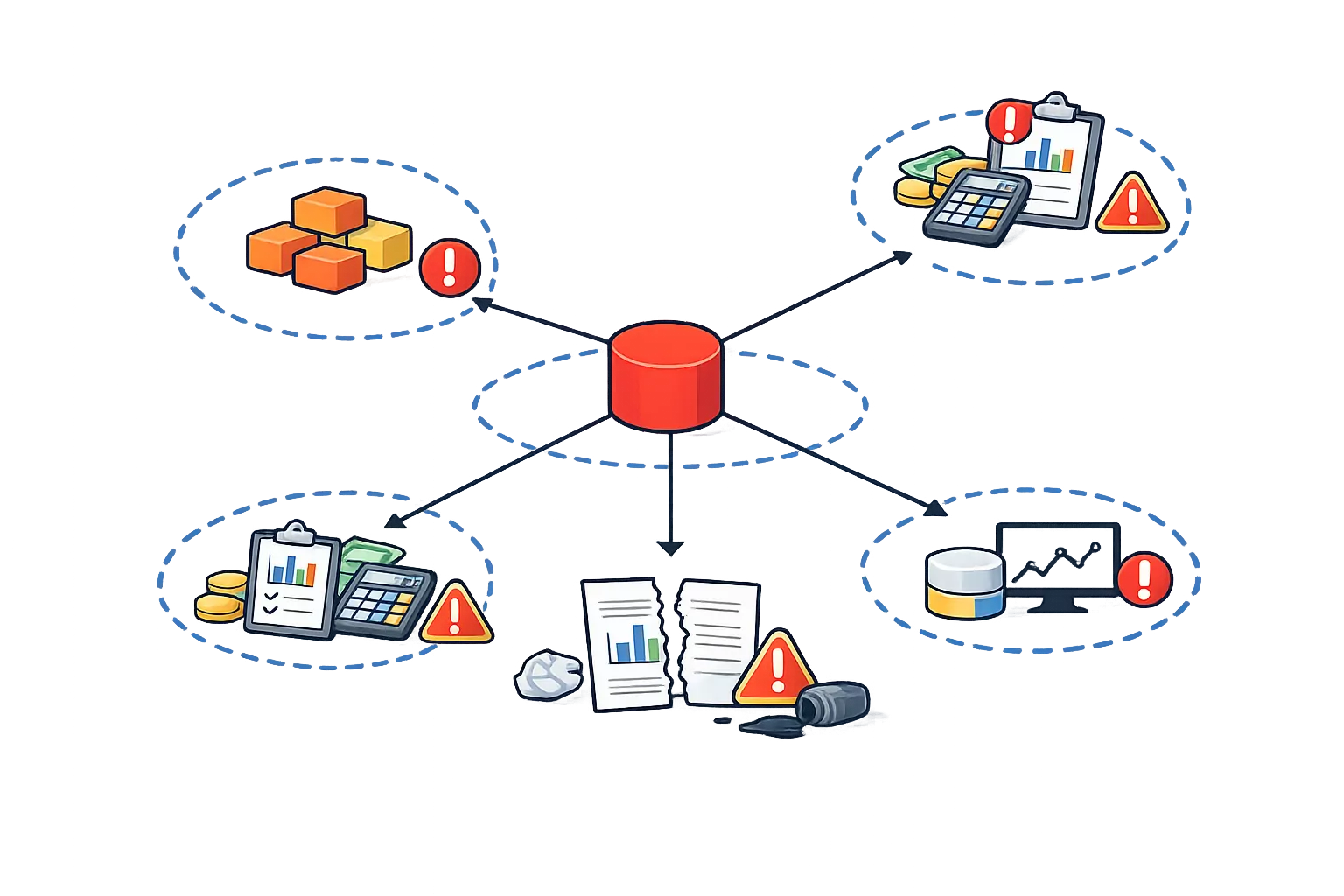
When cascading side effects are common:
- Changes require excessive coordination.
- Teams hesitate to adjust business rules.
- Testing becomes slow and reactive.
- Rollbacks increase.
- Trust in automation decreases.
Instead of improving the business, the system becomes fragile.
SMBs often respond by:
- Reducing automation
- Avoiding structural improvements
- Reintroducing manual checks
- Creating parallel spreadsheets “just in case”
This slows growth.
Why SMBs are especially vulnerable
Large enterprises may have dedicated architecture teams.
SMBs often:
- Add features incrementally.
- Combine multiple SaaS tools.
- Depend heavily on integrations.
- Modify rules without full documentation.
This creates invisible dependency chains.
Because the organization is smaller, changes feel safer.
But structurally, they are not.
Diagnostic tests
To detect cascading side effects, ask:
- If we change this field, which automations depend on it?
- Which reports use this value?
- Which integrations read or write this data?
- Are derived values recalculated from this change?
- Does this status influence permissions or access?
Another test:
Can you draw the downstream effects of a single rule change?
If the answer is unclear, dependencies are hidden.
Hidden dependencies enable cascades.
Structural explanation
At a structural level, cascading side effects occur when:
- One element is used as both input and control.
- A value serves multiple roles (operational and analytical).
- Derived values are not isolated from source logic.
- Integrations depend on intermediate states.
- Rules trigger processing that is not visibly connected.
The core problem is not change.
It is coupling without visibility.
When dependency relationships are implicit, changes propagate silently.
When relationships are explicit and documented, propagation can be predicted.
Structural resolution
Reducing cascading side effects does not mean reducing automation.
It means structuring it carefully.
Possible approaches:
- Separate operational states from reporting states.
- Isolate derived calculations from core inputs.
- Document rule dependencies explicitly.
- Introduce staging environments for rule changes.
- Limit multi-purpose fields.
- Avoid reusing one field as trigger, metric, and permission control simultaneously.
- Map integration dependencies before altering shared data.
The goal is not to eliminate connections.
The goal is to understand them.
A practical discipline
Before implementing a change, adopt a simple discipline:
- Identify the direct purpose of the change.
- Identify all downstream consumers of the changed value.
- Identify derived values recalculated from it.
- Identify external systems depending on it.
- Simulate the change conceptually before deploying it.
This transforms change from reactive to structural.
In short
Cascading side effects happen when:
- A small change affects more than intended.
- Dependencies are hidden.
- Systems are tightly coupled without visibility.
The system is not failing.
It is interconnected.
When interconnection is unmanaged, stability decreases.
When interconnection is visible and structured, change becomes predictable.